Your Balcony Deserves Better Than That Dead Plant
Let’s assess your current balcony situation. There’s probably a rusty folding chair you haven’t sat in since 2022, a forgotten ashtray from the previous tenant, and the desiccated remains of something that was once a geranium. Maybe a broken clothes drying rack. Definitely some mysterious grime in the corners.
Your balcony has potential. It’s outdoor space—a luxury in European cities where square meter prices rival small nations’ GDP. That 4m² rectangle could be your morning coffee sanctuary, your herb garden, your mini-escape from apartment living, or at minimum, something pleasant to look at through your window.
Let’s transform that neglected concrete slab into an actual garden. No, you don’t need a garden center budget or horticultural degree. You just need a plan.
The Reality Check: What Your Balcony Can Actually Handle
Before you start fantasizing about balcony jungles, let’s establish constraints.
Weight Limitations
The Sobering Truth: European balconies typically support 200-350 kg/m² (including the floor weight itself). Your 4m² balcony = roughly 800-1,400kg maximum, minus the balcony structure weight.
What This Means:
- Large planters with wet soil are heavy (25-liter pot with soil and plant ≈ 30-40kg)
- You can’t just pile on unlimited containers
- Larger balconies have more capacity but still finite
The Calculation:
- Two people (150kg)
- Furniture (50-100kg)
- Planters (200-400kg depending on number and size)
- Leaves headroom for safety
Italian Balcony Wisdom: Romans have been balcony gardening for centuries. Their trick? Vertical gardens and wall-mounted planters that distribute weight to building walls rather than balcony floor. Clever engineering disguised as aesthetic choice.
Exposure: Sun, Wind, and Rain
Sun Exposure Assessment:
South-Facing (Northern Hemisphere): Maximum sun, 6-8+ hours daily
- Best For: Tomatoes, peppers, herbs, Mediterranean plants, succulents
- Challenge: Can overheat in summer, requires more frequent watering
- Strategy: Shade-tolerant plants in hottest months, drip irrigation systems
North-Facing: Shade most of the day, 2-4 hours max
- Best For: Ferns, hostas, shade-loving herbs (mint, parsley), lettuce
- Challenge: Limited plant options
- Strategy: Embrace shade plants, focus on foliage over flowers
East-Facing: Morning sun, afternoon shade
- Best For: Most herbs, many vegetables, flowering plants
- Sweet Spot: Gentle morning light, protected from harsh afternoon sun
- Strategy: This is actually ideal for beginners
West-Facing: Afternoon/evening sun, intense heat
- Best For: Heat-loving plants, evening-blooming flowers
- Challenge: Can be too intense in peak summer
- Strategy: Moveable pots to adjust exposure
Wind Assessment:
High-rise balconies face serious wind. Plants will dry out faster, delicate species will snap, lightweight pots will tip.
Solutions:
- Heavy pots or secure lighter ones
- Wind-resistant plants (lavender, rosemary, ornamental grasses)
- Windbreak screens (bamboo, fabric panels: €40-100)
- Group plants together for mutual protection
The Amsterdam Problem: Dutch balcony gardeners face relentless wind from North Sea. They use sturdy terracotta pots (heavy when wet, stable), wind-resistant natives, and secure everything with wire or ties. Function over form, but it works.
Container Strategy: Size, Material, and Drainage
Size Matters
The Rule: Bigger is almost always better. Large containers:
- Hold more water (less frequent watering)
- Provide more root space (healthier plants)
- Better temperature stability
- Look more impressive
Minimum Sizes:
- Herbs: 20cm diameter, 20cm deep
- Vegetables: 30-40cm diameter, 30cm+ deep
- Small trees/shrubs: 40-50cm diameter, 40cm+ deep
- Anything smaller will dry out constantly and frustrate you
Material Choices
Terracotta (Classic for Reason):
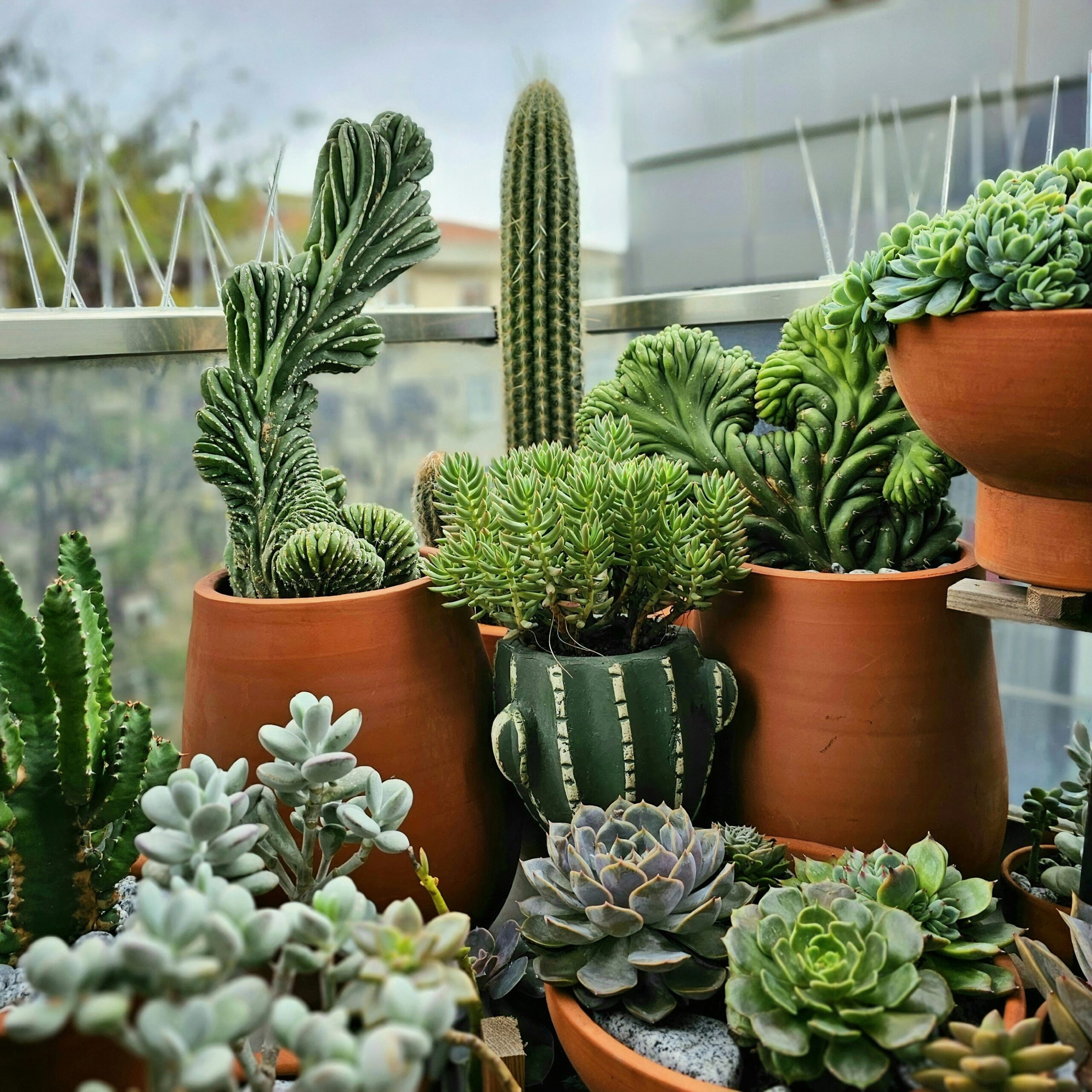
- Pros: Breathable, heavy (stable), ages beautifully, good for Mediterranean plants
- Cons: Heavy, breakable, dries out faster than plastic
- Cost: €15-50 depending on size
- Best For: Southern European climates, established plants
Plastic/Resin:
- Pros: Lightweight, retains moisture, cheap, won’t crack in frost
- Cons: Less aesthetically pleasing (though improving), can overheat in sun
- Cost: €5-30
- Best For: Weight-conscious balconies, beginners, temporary setups
Metal (Zinc, Copper, Steel):
- Pros: Modern aesthetic, durable, lightweight
- Cons: Can heat up in sun (stress roots), eventually rust/corrode
- Cost: €30-100+
- Best For: Contemporary design aesthetics, shaded balconies
Wood:
- Pros: Natural look, good insulation, DIY-friendly
- Cons: Rots eventually, needs treatment, medium weight
- Cost: €20-80
- Best For: Rustic or natural aesthetics, DIY enthusiasts
The Scandinavian Approach: Swedish balcony gardens favor uniform containers (usually simple terracotta or white plastic) in varying sizes. Visual coherence makes small spaces feel intentional rather than cluttered. Three large matching pots beat ten mismatched ones.
Drainage is Non-Negotiable
The Reality: Poor drainage = root rot = dead plants = why you think you’re bad at gardening when you’re just bad at drainage.
Requirements:
- Holes in bottom of every container (drill them yourself if needed)
- Saucers/trays to catch excess water (protect balcony floor)
- Consider feet/risers under pots for airflow (€2-5 per pot)
The Overflow Problem: Your downstairs neighbor won’t appreciate your drainage water. Use saucers, empty them regularly, or use self-watering containers with reservoirs.
Plant Selection: What Actually Thrives
Forget trying to grow plants that need different conditions than you have. Work with your balcony’s reality.
For Sun-Drenched Balconies:
Herbs That Love Heat:
- Basil (multiple varieties, incredibly productive)
- Thyme (low maintenance, evergreen)
- Rosemary (practically indestructible, beautiful year-round)
- Oregano (spreads enthusiastically, excellent for cooking)
Vegetables That Deliver:
- Cherry tomatoes (one plant = months of tomatoes, choose balcony varieties)
- Peppers (chili or sweet, productive in containers)
- Lettuce (successive planting for continuous harvest)
- Radishes (fast-growing, good for beginners)
Flowers for Color:
- Geraniums (classic European balcony plant for reason)
- Petunias (big impact, long flowering)
- Marigolds (cheerful, pest-deterrent)
- Lavender (beautiful, fragrant, low-water once established)
For Shaded Balconies:
Shade-Tolerant Herbs:
- Mint (actually prefers partial shade, spreads aggressively so container is good)
- Parsley (happy with morning sun)
- Chives (tolerates shade well)
- Coriander/Cilantro (prefers cooler conditions anyway)
Foliage Plants:
- Ferns (multiple varieties, lush and dramatic)
- Hostas (if you have depth for their roots)
- Ivy (covers walls, creates green backdrop)
- Begonias (shade-flowering option)
The Challenge Plants:
- Most vegetables need 6+ hours sun (sorry, shade balconies)
- Salad greens are your best bet
- Focus on herbs and ornamentals instead
Year-Round Interest
Don’t just plan for summer. European climates have actual winters.
Spring: Bulbs (crocus, tulips, daffodils) in containers Summer: Herbs, vegetables, flowering annuals Autumn: Late-season lettuce, kale, ornamental grasses Winter: Evergreens (small conifers, box, rosemary), structural plants, winter pansies
The German Four-Season Strategy: German balcony gardeners plant in layers: spring bulbs under summer annuals under autumn grasses. Same container, year-round interest. When summer plants die, pull them, leaving dormant bulbs for next spring.
Layout and Design Principles
Vertical Thinking
Floor space is limited. Wall space is not.
Vertical Options:
- Wall-mounted planters (€15-40 each)
- Hanging baskets (€10-30, but check weight on railings)
- Trellises for climbers (€20-60)
- Ladder shelves (€40-100)
- Stacked planters (€30-80)
Climbers for Small Spaces:
- Clematis (beautiful flowers, grows up not out)
- Jasmine (fragrant, evergreen varieties available)
- Climbing roses (choose compact varieties)
- Peas/beans (edible, productive)
Weight Distribution: Remember: wall-mounted options put weight on building structure, not balcony floor. If weight is concern, go vertical.
The Three-Height Rule
Design Principle: Mix plants at three height levels for visual interest.
- Tall/Upright: Back of space or corners (grasses, climbers, shrubs)
- Medium: Middle zone (most herbs, small vegetables, upright flowers)
- Trailing: Front or edges (trailing petunias, ivy, strawberries)
The Effect: Creates depth and professionalism. Single-height plantings look amateur.
Color and Repetition
The French Approach: Parisian balconies often feature limited color palettes—all white flowers, or pink geraniums repeated. Restraint creates sophistication.
Beginner Strategy: Choose 2-3 colors max. Repeat them in different plants. Looks intentional and cohesive.
Example Palette:
- White geraniums
- Purple lavender
- Green herbs Result: Classic, elegant, never boring.
Practical Maintenance: Making It Actually Work
Watering Systems
Manual Watering: Small balconies with 5-10 plants = fine manually. But it’s daily in summer. Can you commit?
Self-Watering Containers: Built-in reservoirs last 7-14 days. More expensive (€30-80 per pot) but worth it if you travel or forget.
Drip Irrigation: Tubing with timers delivers water automatically. Cost: €60-150 for balcony setup. Game-changer for serious balcony gardeners or frequent travelers.
The Barcelona Solution: In drought-prone Spain, balcony gardeners use “ollas”—unglazed terracotta vessels buried in containers that slowly seep water. Ancient tech, modern application. DIY for €10-20 per pot.
Fertilizing
Container plants need feeding—they can’t access ground nutrients.
Options:
- Slow-release granules (easy, 3-6 months: €10-20)
- Liquid fertilizer weekly/bi-weekly (€8-15, more control)
- Compost top dressing (natural, free if you make it)
The Rule: Half-strength, twice as often. Containers flush nutrients quickly; little and often beats occasional heavy feeding.
Pest Management
Common Balcony Pests:
- Aphids (herbs and roses love them)
- Spider mites (hot, dry conditions)
- Whitefly (especially on tomatoes)
Organic Solutions:
- Strong water spray dislodges many pests
- Insecticidal soap (€8-15)
- Neem oil (€10-18)
- Companion planting (marigolds deter many pests)
- Accept some damage (perfection is exhausting)
The Dutch Practicality: Netherlands has strict pesticide rules, forcing organic approaches. They’ve learned that healthy plants resist pests better than chemicals protect weak ones. Good soil, proper watering, adequate sun = stronger plants = fewer problems.
Budget Tiers: From Starter to Serious
Beginner Setup (€100-200):
- 5-7 plastic containers various sizes: €30-60
- Potting mix: €20-30
- Basic herbs and flowers: €30-50
- Watering can: €10-15
- Fertilizer: €10-15
- Seeds for succession planting: €10-20
Result: Functional, productive, low-commitment trial.
Committed Gardener (€300-600):
- 8-12 quality containers (terracotta/resin mix): €150-250
- Vertical elements (trellis, wall planters): €60-120
- Premium potting mix: €40-60
- Diverse plant selection: €80-120
- Proper tools (hand trowel, pruners, gloves): €30-50
- Drip irrigation basics: €40-80
Result: Established garden that looks intentional, requires moderate maintenance.
Balcony Garden Enthusiast (€800-1,500):
- 15+ designer containers: €400-700
- Complete drip irrigation system: €120-200
- Structural plants (small trees, large specimens): €150-300
- Furniture upgrade (café set that integrates): €200-400
- Lighting for evening ambiance: €100-200
- Specialized tools and equipment: €80-150
Result: Instagram-worthy balcony garden that’s genuinely functional living space.
The Realistic Timeline
First Year: Experimentation. Some plants will die. You’ll learn what works in your specific microclimate. This is normal and valuable.
Second Year: Confidence. You know your balcony’s patterns. Your plant choices improve. Things start looking cohesive.
Third Year+: Established garden. Perennials mature. You’ve developed systems. Maintenance becomes routine rather than overwhelming.
The Munich Example: A couple started with six plastic pots of herbs and petunias (€60 total). Three years later, they had a lush vertical garden with drip irrigation, seasonal vegetables, and permanent structural plantings (€1,200 invested). They describe year one as “killing plants educationally” and year three as “actually knowing what we’re doing.”
The Bottom Line
Your balcony garden doesn’t need to compete with Chelsea Flower Show. It needs to make you happy when you step outside with morning coffee or water your plants after work.
Start simple: 5-7 containers, easy plants (herbs, geraniums, lettuce), manageable maintenance. Expand as you learn what works and what you actually enjoy.
The best balcony garden is one you’ll maintain. A few thriving plants in nice pots beat two dozen struggling specimens in mismatched containers. Quality over quantity.
Your balcony’s potential is limited only by weight capacity and imagination. Everything else is solvable—wrong sun exposure? Different plants. No time to water? Self-watering pots. Limited space? Vertical garden.
Welcome to balcony gardening. Your morning coffee ritual is about to get significantly better.
Essential Resources:
- Plant Selection by Climate: rhs.org.uk/plants
- Container Gardening: urbangardensweb.com
- European Suppliers: bakker.com, crocus.co.uk, meilland.com