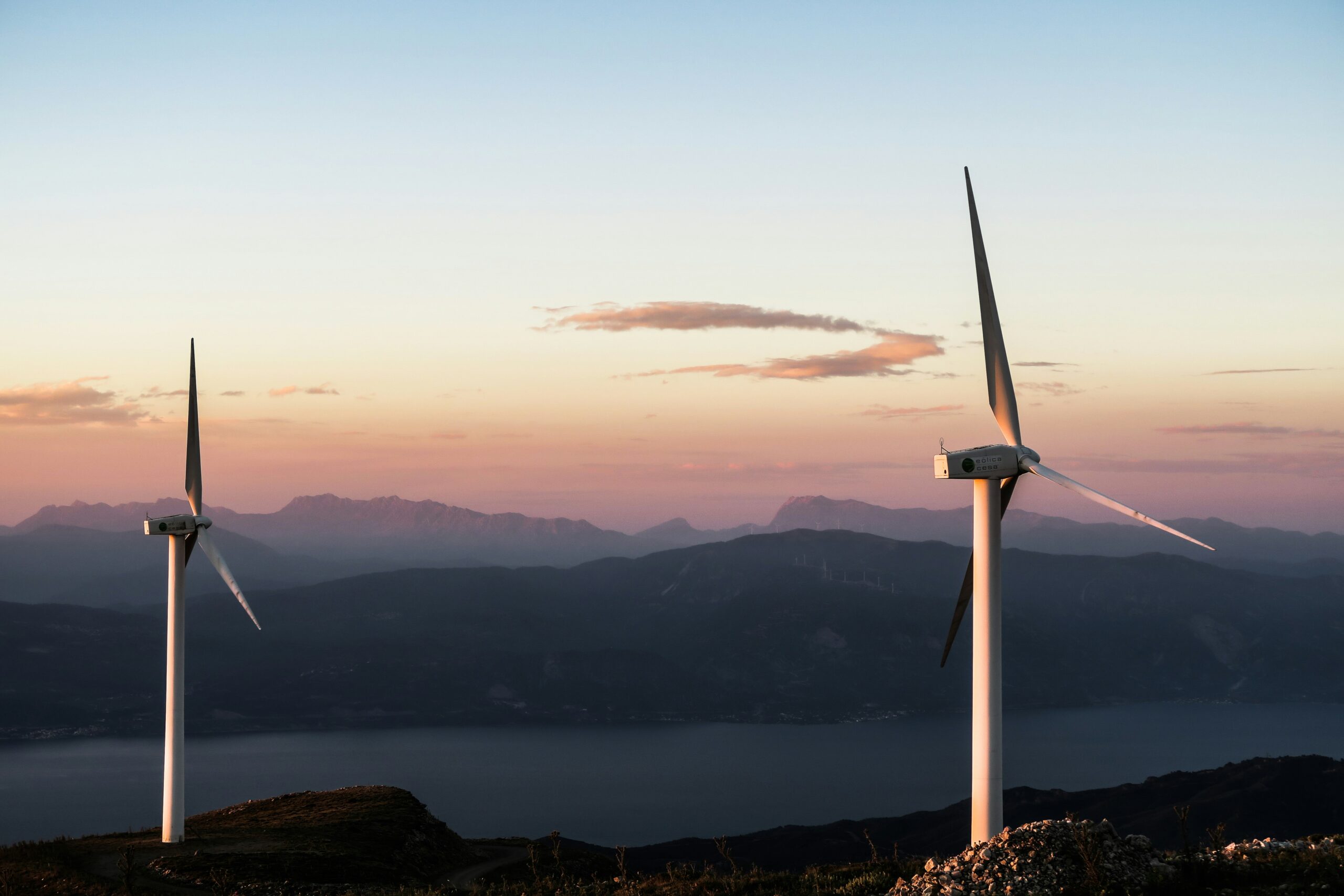
In January 2025, something remarkable happened that received less attention than it deserved: Spanish solar photovoltaic capacity reached 32,043 MW, surpassing wind power (32,007 MW) for the first time to become the country’s largest renewable technology. This milestone wasn’t symbolic—it crystallized Spain’s transformation into Europe’s renewable energy powerhouse and validated the investment thesis driving billions of euros into Spanish green infrastructure.
The numbers compel attention. Renewable sources contributed 56% to Spain’s electricity mix in 2024, an 11% production increase marking a national record. Wind energy leads at 23%, followed by nuclear at 19%, and solar at 20.3%—which overtook combined cycle to claim third place. Coal has collapsed to just 1.1%, the lowest share in history. By 2030, Spain targets 81% renewable electricity generation, requiring massive continued investment across solar, wind, storage, and green hydrogen.
Over €160 billion is allocated to green initiatives through EU Recovery and Resilience Facility funding, Spain’s National Integrated Energy and Climate Plan, and private capital deployment. This isn’t government spending alone—it’s catalytic public investment attracting multiple times that amount in private capital. For institutional investors, family offices, and high-net-worth individuals seeking exposure to Europe’s energy transition, Spain presents opportunity set rivaling or exceeding better-known markets.
Understanding why Spain became renewable investment destination, where capital is flowing, what returns are achievable, and what risks lurk requires navigating beyond promotional material to structural advantages, policy frameworks, and market realities shaping the sector. This analysis provides framework for European investors considering Spanish renewable energy allocation across multiple asset classes and strategies.
Why Spain Wins at Renewables
Spain’s renewable energy leadership isn’t accidental—geographic, political, and economic factors converge to create genuine competitive advantages.
Natural resource abundance tops the list. Spain receives over 300 days of sunshine annually across most territory—approximately 50% more solar irradiation than Germany, Europe’s largest solar market. This translates directly to higher energy generation per installed capacity and better project economics.
Wind resources are similarly exceptional. Atlantic and Mediterranean coastlines plus interior plateaus deliver consistent, strong winds. Spain ranks fourth globally in wind power production—not by accident but by exploiting natural advantages. Offshore wind potential remains largely untapped, representing future growth opportunity.
Extensive coastline enables tidal and wave power development, though these technologies remain less mature than solar and wind. Geographic diversity allows renewable generation across multiple technologies and regions, reducing concentration risk.
Policy stability provides crucial investment certainty. Spain’s National Integrated Energy and Climate Plan (PNIEC) sets clear targets: 76 GW solar PV and 62 GW wind capacity by 2030 (up from 32 GW and 32 GW today), 22.5 GW energy storage, and 12 GW electrolyser capacity for green hydrogen.
These aren’t aspirational goals—they’re backed by streamlined permitting, tax incentives, grid connection facilitation, and government procurement commitments. Spain learned from Germany’s Energiewende mistakes, implementing more efficient processes that accelerate deployment.
The Climate Change and Energy Transition Act passed by Congress aims for climate neutrality (100% renewable grid, full decarbonization) by 2050. Bipartisan support means targets survive government changes—rare political stability in European energy policy.
EU funding supercharges investment. Spain secured €2.58 billion in grants and €1.7 billion in loans under REPowerEU initiative, with an additional €22 billion from ICO Green Line (state-backed green financing) and approximately €140 billion in broader EU Recovery and Resilience Facility allocations targeting green transition.
This public capital de-risks private investment through grants, subsidies, guarantees, and co-financing. Every euro of public funding typically attracts €3-€5 private capital—multiplier effects reaching hundreds of billions.
Grid infrastructure provides foundation. Spain’s electrical system allows maximum renewable production under safe conditions—sophisticated transmission network, regional interconnection, and smart grid technology enable integrating variable renewables without compromising reliability.
Grid investments continue—€25 billion allocated through 2030 for upgrades addressing congestion, expanding capacity, and enabling renewable integration. These infrastructure investments create opportunities for investors across the value chain.
Industrial ecosystem spans the full value chain. Spain hosts advanced manufacturing (solar panels, wind turbines, inverters), engineering and construction capabilities, operations and maintenance providers, and research and development centers (CENER, CIEMAT, IES).
This ecosystem depth reduces execution risk—projects don’t depend on importing everything. Local supply chains improve economics and accelerate timelines. Spanish companies like Iberdrola, Acciona, and Solaria are global renewable leaders providing expertise and partnership opportunities.
Favorable economics complete the picture. Solar and wind costs have dropped to €20-30/MWh, making them Spain’s cheapest energy sources. These are unsubsidized, market-competitive prices—renewables win on pure economics, not just environmental benefits.
Grid parity was achieved years ago. New renewable projects routinely underbid fossil fuel alternatives in energy auctions, demonstrating sustained economic viability independent of subsidies or mandates.
Investment Opportunities: Where Capital Flows
Spanish renewable investment opportunities span technologies, structures, and risk-return profiles accommodating diverse investor requirements.
Solar Photovoltaic Development
Spain’s solar pipeline is massive—over 5,141 MW of large-scale projects entered environmental permitting in the first seven months of 2025 alone. Over 33 GW submitted for permitting over the past 12 months indicates enormous development activity.
Utility-scale solar (50+ MW projects) offers scale economies and straightforward power purchase agreement (PPA) structures. Developers target unsubsidized returns of 6-8% for operational assets, 10-15% for development-stage investments. Projects achieve commercial operation 18-36 months from financial close, depending on permitting and construction timelines.
Major developers include Spanish companies (Iberdrola, Acciona, Naturgy) and international players (EDP Renewables, Enel Green Power). Investment structures range from direct project acquisition to co-investment with developers to purchasing operational assets.
Entry points vary: development-stage investments at €0.50-1.00/W installed capacity (high risk, high return), ready-to-build at €1.00-€1.50/W (medium risk/return), and operational assets at €1.50-€2.00/W (lower risk, stable cash flows).
Distributed solar (rooftop and small-scale) addresses Spain’s 5-6.5 GW self-consumption potential. Current penetration remains low—only 459 MW by 2019—but growth accelerates rapidly. Residential comprises 32% of installations, industrial 42%, commercial 26%.
Self-consumption economics are compelling: costs expected to decrease 30-55% through 2030, battery integration facilitates adoption, and payback periods of 5-8 years attract corporate and residential customers. Favorable regulation (Royal Decree Law 15/2018) removed previous barriers including the notorious “sun tax.”
Investment opportunities include financing platforms for residential/commercial installations, aggregated portfolios of distributed assets, and solar-as-a-service models eliminating upfront costs for customers. Returns of 8-12% are achievable on distributed solar portfolios with professional management.
Wind Energy Expansion
Wind represents Spain’s largest renewable source (23% of electricity) with continued growth potential. Onshore wind is mature technology with well-understood economics and risk profiles.
Onshore wind projects typically achieve returns of 6-9% for operational assets, higher for development-stage investments. Spain’s wind resources are exceptional, construction timelines are predictable (18-24 months), and operations are well-established.
Challenges include land availability in prime wind corridors, grid connection constraints in some regions, and community opposition (NIMBYism) affecting some projects. However, overall outlook remains positive with 62 GW targeted by 2030 versus 32 GW currently installed.
Offshore wind represents Spain’s most significant untapped opportunity. Coastal resources are excellent but utilization lags northern European countries. Development is accelerating with government identifying priority areas and streamlining permitting.
Offshore wind economics are capital-intensive—€2.50-€3.50/W installed capacity—but improving rapidly as technology advances. Returns target 7-10% for operational assets. Investment horizon is longer (4-6 years from commitment to commercial operation) and execution risk is higher than onshore.
First-mover advantage exists for investors willing to accept higher risk. As offshore permitting streamlines and project pipeline expands, opportunities will proliferate.
Energy Storage Solutions
Spain targets 22.5 GW storage capacity by 2030 to address renewable intermittency. Battery storage economics are improving rapidly—declining costs coincide with expanding revenue opportunities.
Utility-scale battery storage (100+ MW projects) increasingly partners with solar and wind installations. Batteries provide grid services (frequency regulation, capacity reserves), arbitrage opportunities (storing cheap electricity, selling during high-price periods), and firm capacity through upcoming capacity market auctions.
Returns target 8-12% depending on revenue stacking (combining multiple income streams). Investment structures include standalone battery projects, hybrid renewable+storage installations, and retrofitting existing renewable facilities.
Large-scale projects exceeding 300 MW gain momentum due to economies of scale and increasing grid stability needs. Spain’s first capacity market auctions planned for September 2025, operational in 2026, will provide additional revenue certainty improving investment economics.
Distributed storage residential and commercial battery systems) supports self-consumption installations. Economics remain challenging without subsidies but improving as costs decline and value propositions strengthen.
Vehicle-to-grid integration creates additional opportunities as electric vehicle adoption increases. Aggregated distributed storage could provide virtual power plant capabilities, opening new revenue streams.
Green Hydrogen: The Ambitious Bet
Spain positions itself as major green hydrogen producer and exporter. The National Plan targets 12 GW electrolyser capacity by 2030—up from 0.5 GW today. Moeve’s Andalusian Green Hydrogen Valley represents €3 billion investment in Europe’s most ambitious renewable hydrogen project.
Green hydrogen production uses renewable electricity for electrolysis, producing hydrogen without carbon emissions. Applications span heavy industry (steel, chemicals), long-haul transport, energy storage, and export markets.
Economic viability remains challenging—green hydrogen currently costs €4-6/kg versus €1-2/kg for grey hydrogen from fossil fuels. However, projections show costs declining to €2-3/kg by 2030 as scale increases and technology improves.
Investment opportunities span electrolysis equipment manufacturing, dedicated renewable energy for hydrogen production, hydrogen storage and transport infrastructure, and industrial applications development. Returns are speculative—potentially 15-20%+ for successful early investments, but technology and market risk are substantial.
EU funding of €3 billion specifically for Spanish hydrogen reduces risk but doesn’t eliminate it. This sector suits investors comfortable with long timescales (10+ years to maturity), technology risk, and potential total loss balanced against transformative upside if hydrogen economy materializes as predicted.
Renewable Energy Infrastructure Funds
For investors seeking diversification and professional management, infrastructure funds provide exposure to Spanish renewables without direct project investment.
Iberdrola Green Infrastructure Fund and similar vehicles from major Spanish utilities offer diversified portfolios of operational assets. These funds target stable returns (5-7% annually) from contracted cash flows with inflation protection and modest appreciation potential.
International funds like BlackRock’s European Renewable Energy ETF include significant Spanish exposure alongside other European markets. These provide liquidity (daily trading) and diversification beyond Spain-specific risks.
Private infrastructure funds from specialists like Ardian, Mirova, or Greencoat offer targeted exposure with professional asset management. Minimum investments typically start at €250,000-€1,000,000 with limited liquidity but potentially higher returns than liquid alternatives.
Fund structures typically charge management fees (1-1.5% annually) and performance fees (10-20% of returns above hurdles). These costs reduce net returns but provide access to deal flow, expertise, and scale difficult for individual investors to replicate.
Corporate Renewable Investment: The PPA Strategy
Corporate Power Purchase Agreements (PPAs) represent growing segment—large energy consumers buying renewable power directly from producers.
Spain’s regulatory environment favors PPAs through favorable accounting treatment, grid access for corporate buyers, and liquid renewable energy certificate (REC) markets. Companies like Iberdrola, Acciona, and EDP Renewables actively structure corporate PPAs.
Physical PPAs deliver actual electrons to buyer’s facilities. These work for energy-intensive operations (data centers, industrial plants) seeking price stability and emissions reductions. Contract terms typically span 10-15 years with fixed or indexed pricing.
Virtual PPAs (financial contracts) allow companies anywhere in Spain to support renewables and hedge electricity costs without physical delivery. These provide more flexibility and work for distributed operations.
Corporate buyers benefit from price certainty (hedging against electricity price volatility), emissions reductions (meeting sustainability commitments), and potentially cost savings versus grid electricity.
Renewable developers benefit from revenue certainty enabling project financing and de-risking investments. This symbiotic relationship drives PPA growth—over €1 billion in corporate PPA activity anticipated in 2025-26.
Investors benefit indirectly—projects with long-term corporate PPAs achieve better financing terms, lower cost of capital, and higher valuations. Targeting assets with quality counterparty PPAs improves investment risk-return profiles.
Investment Vehicles and Structures
Spanish renewable investment accommodates various structures matching investor preferences and circumstances.
Direct project investment provides maximum control and potential returns but requires significant capital, expertise, and management capability. Minimum investments typically €10+ million for utility-scale projects. Suitable for institutional investors, family offices, or high-net-worth individuals with renewable energy expertise.
Co-investment with developers allows participation alongside experienced operators. Developers bring expertise and deal flow; investors bring capital. Structures vary—joint ventures, preferred equity, mezzanine debt—with returns reflecting risk: 8-15% depending on position in capital structure.
Green bonds offer fixed income exposure to Spanish renewable sector. Spain’s green bond issuance reached €6.7 billion in 2023 with demand exceeding supply. Yields typically run 150-200 basis points below comparable corporate bonds—reflecting lower risk and investor demand for sustainable assets.
Green bonds suit conservative investors seeking predictable income with environmental impact. Liquidity is reasonable though less than sovereign bonds. Credit risk depends on issuer—government-backed bonds are virtually risk-free, utility corporate bonds carry modest risk, project bonds vary by specific project.
Equity investment in renewable companies provides exposure through public markets. Iberdrola, Acciona Energía, Solaria trade on Spanish stock exchange with significant renewable operations. Share price appreciation potential combines with dividend income (typically 2-4% yields).
Publicly traded companies offer liquidity and transparency but include non-renewable operations and broader market risk. Stock prices reflect sentiment and multiple factors beyond just renewable business fundamentals.
Infrastructure funds provide professionally managed, diversified exposure. These suit investors seeking renewable allocation without direct involvement. Returns target 5-10% depending on strategy—conservative operational portfolios at lower end, development and opportunistic strategies at higher end.
Venture capital and growth equity target renewable technology companies rather than projects. Spanish renewable tech ecosystem includes energy storage innovators, smart grid software, hydrogen technologies, and grid optimization solutions.
This is highest risk/highest return exposure—many investments fail but successful companies can produce multiples. Suitable for sophisticated investors with high risk tolerance and long time horizons. Minimum investments typically €100,000-€500,000 with complete illiquidity until exit (5-10 years typical).
Risk Factors and Mitigation Strategies
Spanish renewable investment is attractive but not risk-free. Understanding risks and mitigation strategies separates successful investments from disappointments.
Regulatory and policy risk affects all infrastructure investments. While Spain’s renewable policy is currently supportive, governments change and priorities shift. Previous policy reversals (2012 reforms cutting renewable support) remind investors that regulatory risk is real.
Mitigation: Focus on projects with long-term contracted revenues (PPAs, capacity contracts) reducing merchant price exposure. Diversify across technologies and regions. Engage professional advisors tracking regulatory developments. Size investments assuming some policy deterioration rather than best case.
Technology risk particularly affects emerging technologies (offshore wind, green hydrogen, advanced storage). Equipment failures, performance shortfalls, and cost overruns can devastate project economics.
Mitigation: Favor proven technologies (onshore wind, solar PV) for core allocations. Limit emerging technology exposure to opportunistic capital you can afford to lose. Require robust warranties and performance guarantees from equipment suppliers. Partner with experienced developers managing technology risk.
Grid connection and congestion risk affects project development. Some Spanish regions face transmission constraints limiting new project interconnections. The 3% renewable curtailment rate (forced reductions during low demand) indicates grid limitations.
Mitigation: Target regions with available grid capacity or projects including grid upgrades. Factor potential curtailment into return projections. Support investments in grid infrastructure creating capacity for new projects. Diversify geographically across regions with different grid conditions.
Market price risk affects projects selling power at merchant rates. Electricity prices fluctuate with supply/demand, fuel costs, and renewable penetration. High renewable generation during sunny, windy periods can collapse spot prices.
Mitigation: Prioritize projects with long-term PPAs or feed-in premiums providing revenue certainty. If accepting merchant exposure, model conservative price scenarios. Consider hybrid projects (solar+storage) capable of arbitraging price fluctuations.
Construction and development risk affects pre-operational investments. Permitting delays, cost overruns, equipment delivery issues, and contractor problems can delay or prevent projects.
Mitigation: Partner with experienced developers with track records. Structure investments with milestone-based funding (don’t deploy all capital upfront). Require detailed due diligence on permits, grid connection, equipment procurement, and construction contracts. Include contingency reserves for overruns.
Counterparty credit risk affects PPA-backed projects. If corporate or utility offtaker defaults, project loses contracted revenues and must sell power at potentially lower merchant prices.
Mitigation: Assess counterparty creditworthiness carefully. Prefer investment-grade corporate or government offtakers. Diversify across multiple projects with different counterparties. Consider credit enhancement (guarantees, insurance).
Currency risk affects non-euro investors. Returns measured in euros may disappoint if local currency appreciates against euro. Currency hedging adds cost and complexity.
Mitigation: Some infrastructure funds offer currency-hedged share classes. Alternatively, accept currency exposure as diversification. For large commitments, consult currency specialists about hedging strategies.
Liquidity risk is inherent to infrastructure. Unlike public equities, direct renewable investments can’t be sold quickly. Exit typically requires years and depends on finding buyers.
Mitigation: Invest only capital with appropriate time horizon (7-10+ years for direct investments). Maintain adequate liquidity reserves elsewhere in portfolio. Consider fund structures offering earlier liquidity through secondary markets, though at potential discount.
Return Expectations and Portfolio Allocation
Realistic return expectations guide appropriate allocation decisions.
Conservative operational assets (utility-scale solar, onshore wind with long-term PPAs): 5-8% annual returns, primarily income with modest appreciation. Suitable for conservative investors prioritizing stability.
Development and construction-stage projects: 10-15% potential returns reflecting higher risk. Appropriate for moderate-risk portfolios with diversification across multiple projects.
Emerging technologies and early-stage ventures: 15-30% target returns with high variance and significant loss potential. Suitable only for aggressive portfolios and opportunistic capital.
Blended infrastructure funds: 6-10% depending on strategy mix. Appropriate for most investors seeking renewable exposure without direct involvement.
Portfolio allocation should reflect overall investment objectives and risk tolerance. General guidelines:
Conservative investors (capital preservation focus): 5-10% of portfolio in operational renewable assets or conservative funds.
Balanced investors (growth and income): 10-20% allocation split between operational assets (70%) and development/opportunistic strategies (30%).
Aggressive investors (growth focus): 15-30% allocation with significant development and technology exposure.
These are frameworks, not rules. Individual circumstances vary. Consult financial advisors integrating renewable allocation into overall wealth management.
The Investment Decision Framework
Successful Spanish renewable investment requires systematic approach:
- Define objectives: Income focus, capital appreciation, environmental impact, or balanced combination?
- Assess expertise: Do you have renewable energy knowledge and network, or do you need professional management?
- Determine capital: What can you invest with 7-10 year horizon without liquidity needs?
- Evaluate risk tolerance: Can you accept development risk and potential losses, or do you require operational asset stability?
- Choose structure: Direct investment, co-investment, funds, bonds, or public equities based on 1-4 above?
- Select opportunities: Specific technologies, regions, developers matching your risk-return requirements?
- Conduct due diligence: Professional advisors (legal, technical, financial) reviewing all material aspects?
- Structure appropriately: Tax optimization, entity structure, financing mix maximizing after-tax returns?
- Monitor actively: Ongoing performance tracking, risk management, and portfolio adjustments?
- Plan exit: Understanding how and when you’ll realize returns?
The Verdict: Compelling Opportunity with Caveats
For European investors seeking exposure to renewable energy transition, Spain presents compelling proposition:
Strengths: Natural resources, supportive policy, EU funding, proven economics, substantial pipeline, mature ecosystem, clear targets, and improving technologies all support continued growth and attractive returns.
Opportunities: Multiple entry points across risk-return spectrum, diverse technologies, geographic options, and structure flexibility accommodate varied investor requirements.
Risks: Regulatory uncertainty, technology challenges, execution complexity, and market evolution require careful investment selection and management.
Who should invest: Institutional investors and family offices seeking infrastructure allocation, high-net-worth individuals comfortable with illiquidity and complexity, and sophisticated investors with renewable energy knowledge or access to quality advisors.
Who should avoid: Investors needing short-term liquidity, those uncomfortable with regulatory and technology risk, those lacking access to quality opportunities and expertise, and those unable to conduct thorough due diligence.
For appropriate investors, Spanish renewable energy in 2025-26 offers:
- 6-12% potential annual returns depending on strategy
- Inflation protection through long-term contracts
- Diversification from traditional assets
- Environmental and social impact
- Participation in European energy transition
- Portfolio allocation to real assets
The €160 billion commitment to Spanish green transition isn’t hypothetical—capital is flowing, projects are being built, and returns are being generated. Wind farms spin, solar panels generate, batteries store, and increasingly, hydrogen facilities convert renewable electricity to clean fuel.
Investment opportunity is real. Risks exist but are manageable for informed investors. Returns are attractive relative to comparable infrastructure assets. Spain’s renewable leadership is established and accelerating.
The question isn’t whether Spanish renewables offer investment opportunity—clearly they do. The question is whether opportunity matches your specific circumstances, expertise, risk tolerance, and objectives. Answer honestly, structure carefully, and Spanish renewable energy can enhance portfolio returns while supporting energy transition.
As 56% of Spanish electricity already comes from renewables and targets increase to 81% by 2030, the trajectory is clear. Early investors have profited handsomely. Late investors risk overpaying for mature assets. Current investors in 2025-26 may occupy sweet spot—sector is established, economics are proven, policy is supportive, but growth phase continues for years.
The green rush is real. The only question is whether you’ll participate in Spain’s €160 billion renewable revolution.